 TRUEWAYZThe TRUE way to shop
Checking your session
Loading…
TRUEWAYZThe TRUE way to shopAn input controller is a small box your physical mouse plugs into. It forwards your real movements to the gaming PC as a standard USB mouse — and accepts movement instructions from a second computer. The gaming PC sees an ordinary HID mouse on a normal USB port.
Your physical mouse connects to the controller — not directly to the gaming PC. Movements pass through the board end-to-end.
A second link (USB serial or Ethernet, depending on model) lets your analysis PC send movement instructions to the controller.
To Windows, it's a standard HID mouse on a normal USB port. Input arrives as ordinary USB traffic — no drivers, no kernel modules, nothing loaded into the OS.
MAKCU is the community standard; KMNET moves the link onto your LAN; Ferrum 1 is the hardened enterprise unit.
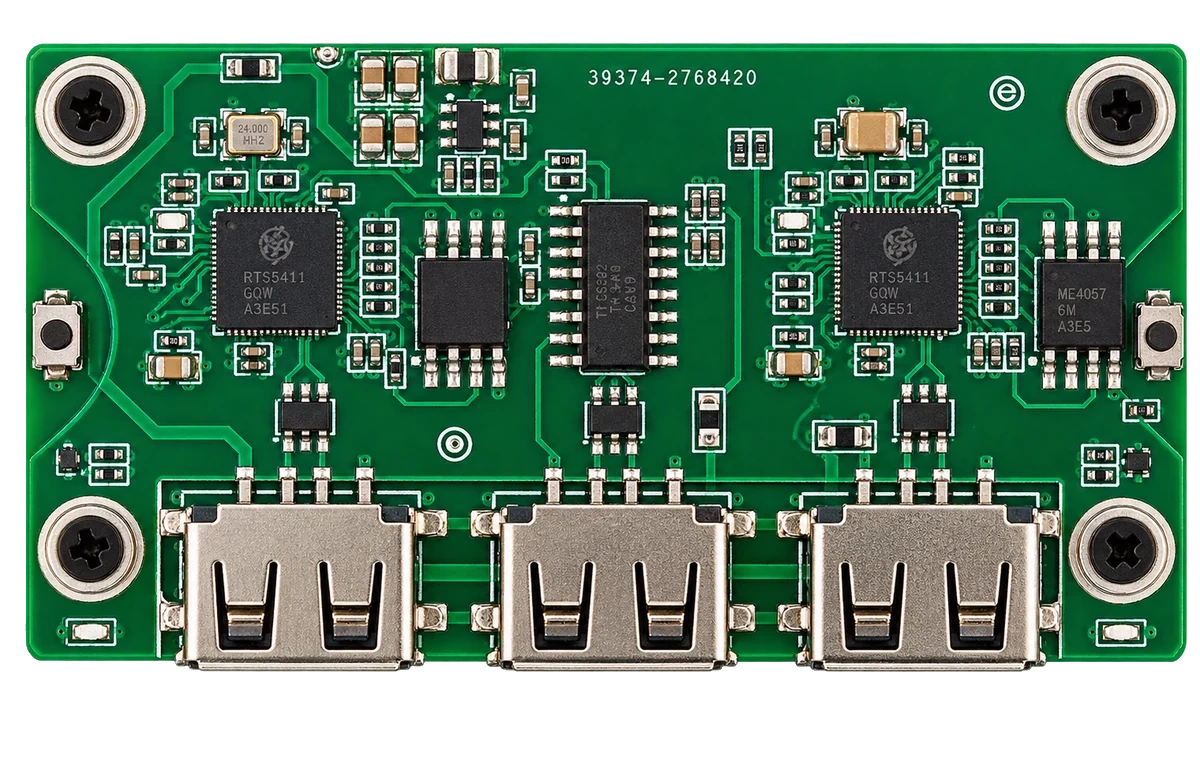
Dual RTS5411 controllers on a green PCB with three fixed-role USB-A ports. The default choice for 2PC builds — and the one every guide covers.
Communicates over gigabit Ethernet instead of USB serial — cleaner cable runs across the room and microsecond LAN latency.
Industrial-grade signal conditioning and RF shielding for scrims and long sessions where a dropped packet is unacceptable.
No. Direct USB passthrough through the board means your in-game feel is identical to plugging in directly.
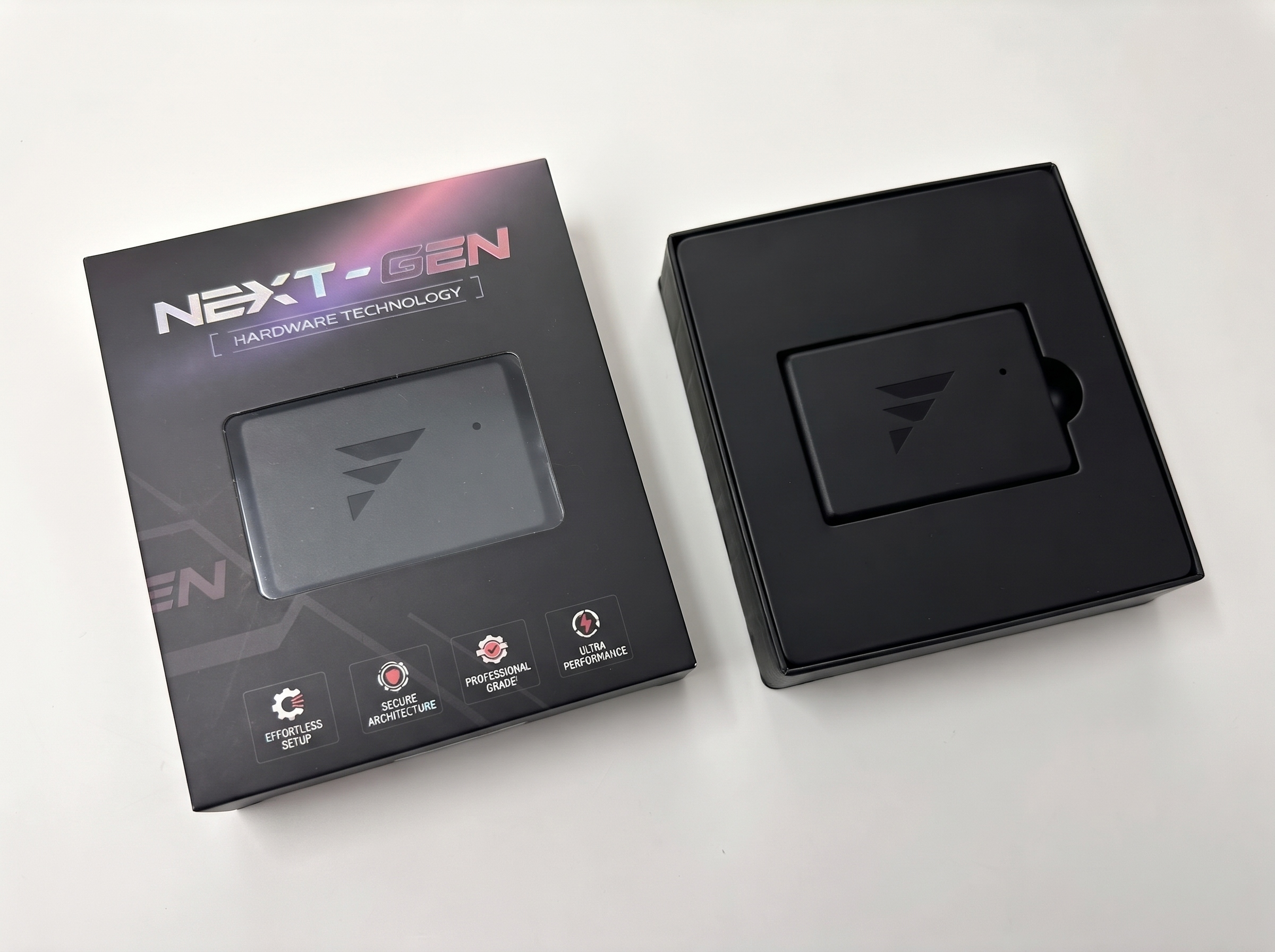
The bench-checked controller, shielded USB cables, and the Quick-Start support card with wiring diagrams and Discord activation instructions.
Same protocol compatibility, open-source firmware you can inspect, at roughly a third of the price. We QC the capacitors on every unit before it ships.
The two-computer topology is the architecture this hardware was built for: the serial command port opens on the second machine, not on the one you play on. Single-computer operation is technically reachable with a networked accessory, but it puts the serial port on the same machine as the game. Read the note on how the device is wired before you build around it.
Attaching a USB-to-Ethernet or wireless accessory to the bridge moves the command channel off USB serial and onto the network, which is ordinary IP traffic you can VLAN, route or block. It changes where commands travel — not what the device is. On a single computer the hardware is still present, and software running on that machine can still see it. If your input is being driven by software in a competitive online game, that breaks those games’ terms of service whatever transport you use, and it will cost you the account.
MAKCU ($29.99) is in stock and bench-checked before boxing. MAKXD is an unreleased successor platform featuring an 8,000 Hz polling rate, an on-board hardware DSP for mathematical curve smoothing, and the MAKXD Link chiplet cable. Compare them on our MAKXD preview page.